Crafting the Perfect Bowl: The Art of Thai Flavor Balancing
July 07, 2026
1 Comment

With over 3,500 five-star reviews, our passion is bringing you the exact flavors you would experience on the streets of Thailand.
To achieve true authenticity, we do something other brands don't: we keep our salt content exceptionally low (just 2%, compared to the 8–15% found in other curry pastes).
Here is why we do it—and how it puts you in control of your kitchen.
## The Secret of "Kruang Prung" (Table Seasoning)
In a traditional Thai home or restaurant, the chef never fully salts the dish in the kitchen. Why? Because authentic Thai cuisine relies on herbs like lemongrass, galangal, and kaffir lime. High sodium masks these delicate notes.
Instead, Thai food is interactive. A dish is served with the complex spice foundation complete, leaving the final salt and acid balancing to the diner at the table.
## Does your curry taste a bit "quiet"?
If you cook with our sauce and find the flavors aren't popping, your palate is likely experiencing "salt nostalgia" from highly processed commercial foods or simply because you prefer to eat at a higher salt level. Because our sauces are packed with spices but low on sodium, the rich flavors can sometimes taste muted at first.
Don't worry—the flavor is all there. It just needs a "wake-up call."
## How to Season Like a Local
Before you serve your dish, take a sip of the curry broth. If it feels like it is missing a final punch, try adding these traditional Thai table adjustments one teaspoon at a time:
**For Depth & Saltiness:** Add a splash of quality fish sauce or a pinch of sea salt. Salt acts as a magnifying glass for our herbs.
**For Brightness:** Add a squeeze of fresh lime juice to cut through the rich coconut milk.
By controlling the salt yourself, you unlock a clean, vibrant, and genuinely authentic Thai experience that mass-market sauces simply cannot replicate.
If you really want to up your game from a dash of fish sauce then read on!
For Thai curry, a simple Prik Nam Pla is all you need. It is as essential as salt and vinegar in a fish and chip shop, takes only a few minutes to prepare, and lets each diner adjust the curry to their own taste.
You may be thinking you rarely, if ever, see this on a table in Thai restaurants in the UK or US—and you would be right. The reasons vary, from health and safety concerns (Fish sauce is an allergen) to some restaurants assuming diners may not know how to season their food properly. Unlike in Thailand, your food usually comes pre-seasoned!
Spicy? Of course that also depends on what chillies you use for this, and if you're prepared to do the extra work of separating out the seeds and the white pith it will be a lot less spicy. Full instructions in the video below.
1 Response
Leave a comment
Comments will be approved before showing up.
Also in Recipe Blog

June 27, 2026
I love pineapple, but put it on my pizza at your own risk! In a curry, though, it’s a different story. In the method used here the pineapple soaks up the flavour of the curry while keeping a sweet centre. And if pineapple in savoury dishes still isn’t for you, simply leave it out.This is one of the easiest, quickest curries you can make, and it works beautifully with a bag of frozen mixed seafood. Let’s get cooking!
Continue Reading

June 13, 2026
This is an incredibly simple dish to prepare. It can be made in minutes with fresh or frozen fish, the only caveat being to choose fish steaks instead of fish fillets if possible as they hold together better when cooking. Also, if using frozen fish allow it to defrost first. You can also choose the level of spice you desire as our Green curry pastes comes with three different spice levels! I'm using the Bangkok Green curry paste which is a medium heat here but you can also check out the Mild...
Continue Reading
August 31, 2025
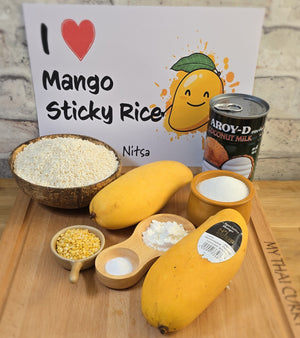
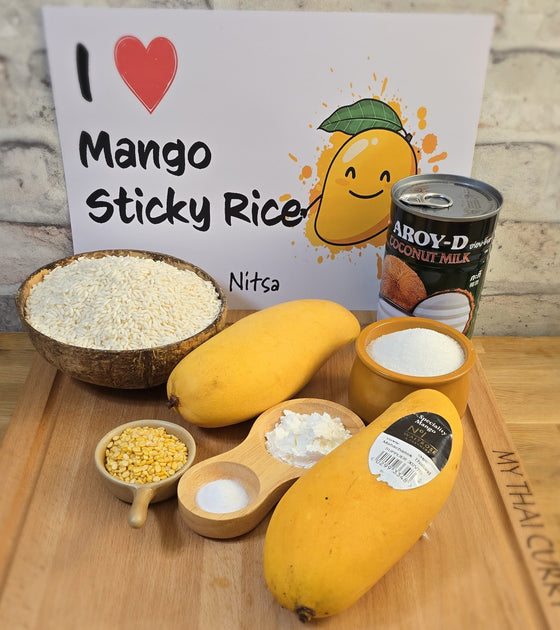
So, even if you think you may never make Thailand’s favourite dessert you should still watch the video just to listen to the foot tapping Issan music to perk up your day!
This recipe is at its best when mangoes are at their best. Typically this will be from April to September for mangoes from Southeast Asia and the Indian subcontinent. These are best found in Asian grocery shops, not as cheap as the supermarket varieties because they are picked at the height of ripeness and exported by air.
Continue Reading








Adele
August 02, 2026
Wow! Did this work:-) My other half and me have very different tastes when it comes to salt. I tend to be a little heavy with it, he’s a minimalist. The fish sauce totally lifted our green curry, suddenly it was zinging! Going to try the prik nam pla for sure next time also!